
What Causes Postpartum Hair Loss — And What Actually Helps
July 2, 20267 min readPostpartum hair loss is one of the most distressing and least talked-about parts of the postpartum experience. Here is the honest explanation of why it happens and what you can actually do about it.
Why Postpartum Hair Loss Happens
During pregnancy, elevated estrogen levels extend the hair's active growth phase (anagen), which is why many women experience noticeably thicker, fuller hair while pregnant. After delivery, estrogen levels drop sharply — and the hair follicles that were held in the growth phase by elevated estrogen simultaneously shift to the resting phase (telogen) and then shed.
This condition is called postpartum telogen effluvium, and it affects up to 50% of new mothers. The shedding typically begins 2–4 months after delivery and can last 3–6 months. At its peak, some women lose several hundred hairs per day — significantly more than the normal 50–100 hairs per day. The result is noticeable diffuse thinning across the scalp, particularly at the temples and hairline.
What Postpartum Hair Loss Looks Like
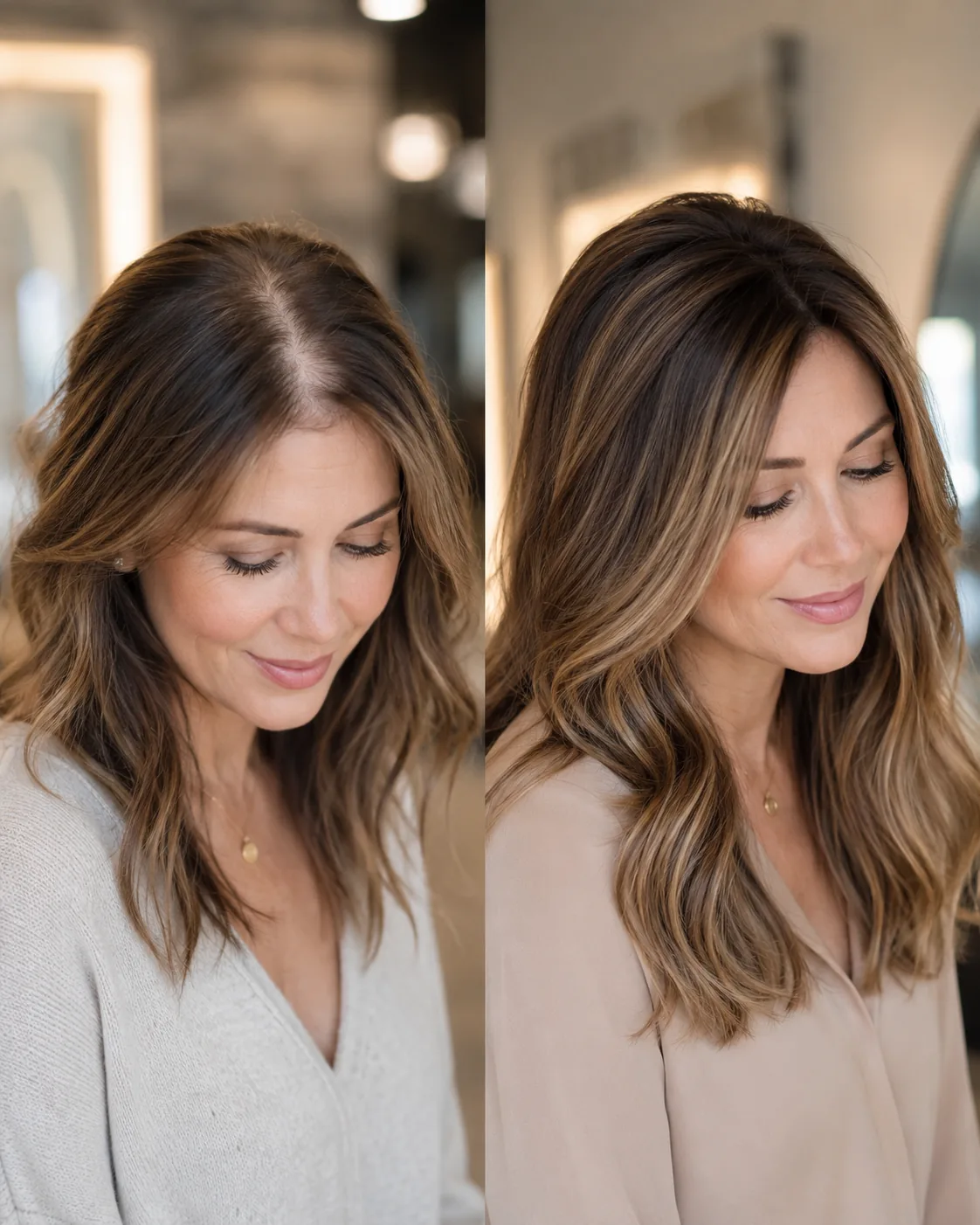
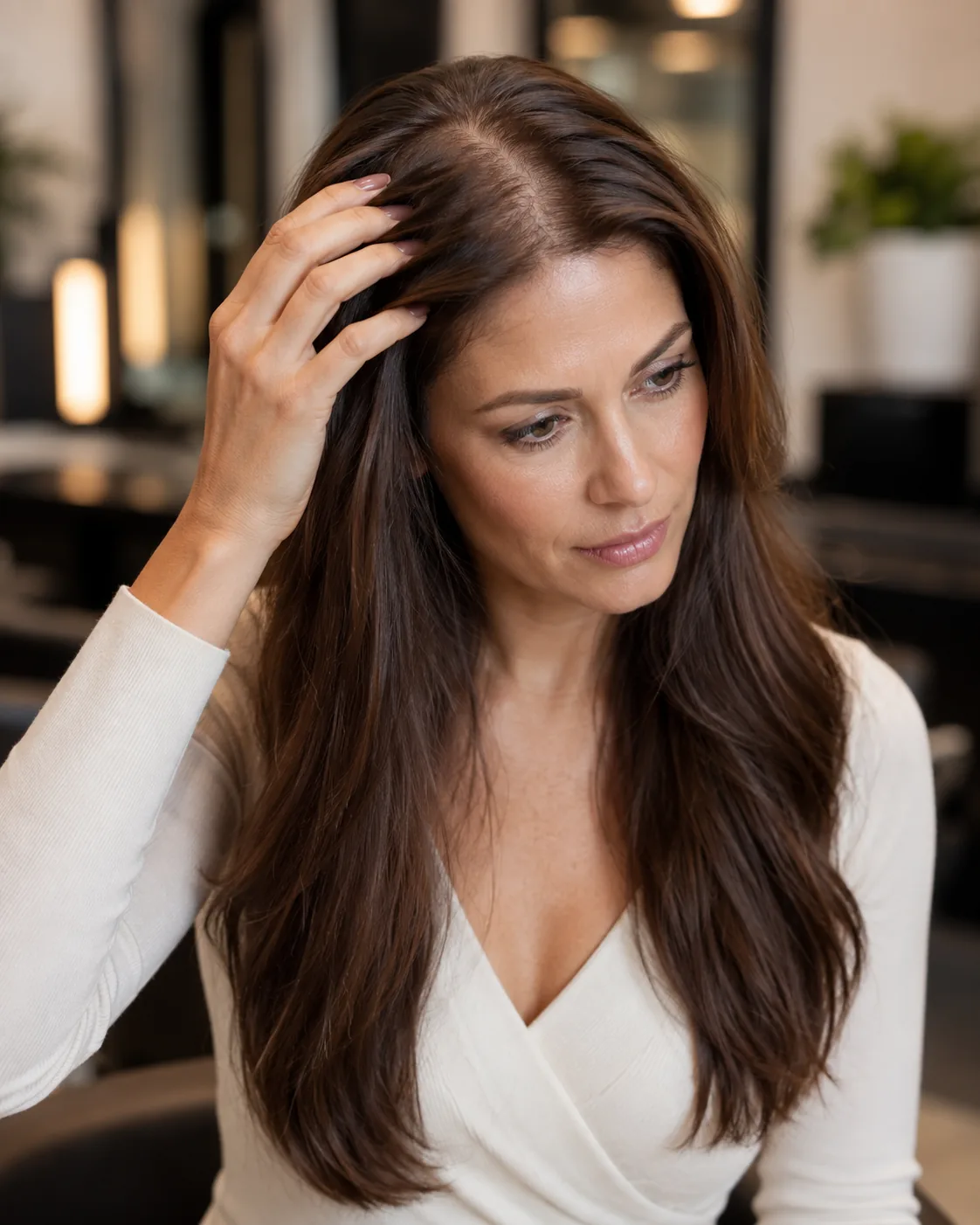
Postpartum hair loss presents as diffuse thinning across the entire scalp, with the temples and hairline often most affected. Many women notice a visible recession at the temples — sometimes called a 'postpartum hairline' — that can be alarming but is almost always temporary.
The shedding is often most noticeable in the shower, on the pillow, and when brushing. The part line may widen and the overall density decreases. Because the loss is diffuse rather than patchy, it can be difficult to see in a mirror until the density loss is significant — which is why many women are caught off guard by how much hair they are losing.
When Does Postpartum Hair Loss Stop?
For most women, postpartum hair loss stops on its own within 6–12 months of delivery as hormone levels stabilize and hair follicles return to the growth phase. Hair density typically returns to pre-pregnancy levels by 12–18 months postpartum.
However, for some women — particularly those who are breastfeeding (which keeps estrogen levels suppressed), have nutritional deficiencies, are under significant stress, or have an underlying predisposition to androgenetic alopecia — the recovery can take longer or may not fully resolve without intervention.
What Actually Helps: Evidence-Based Treatments
Nutritional support is the most important intervention for postpartum hair loss. The postpartum period is nutritionally demanding — breastfeeding alone requires an additional 500 calories per day — and deficiencies in iron, ferritin, zinc, vitamin D, and protein are common and directly impair hair follicle function. A complete blood panel to check these levels is the first step in any postpartum hair loss treatment plan.
Low-level laser therapy (LLLT) has strong clinical evidence for stimulating hair follicle activity and accelerating recovery from telogen effluvium. Monaco Salon offers in-salon low-level laser therapy at the Bay to Bay location. Monaco Salon provides cosmetic and salon-based hair services, not medical diagnosis or treatment. Sudden, unexplained, patchy, postpartum, medication-related, or symptomatic hair loss should be evaluated by a licensed healthcare professional.
Topical minoxidil (Rogaine) is also effective for postpartum hair loss, though it should not be used while breastfeeding. A dermatologist or physician can advise on timing and appropriate use.
Managing the Visual Impact While You Recover
One of the most difficult aspects of postpartum hair loss is the visual impact during the recovery period, which can last 6–18 months. For many new mothers, this coincides with returning to work, social events, and a time when they are already feeling vulnerable about their appearance.
Hair toppers and volumizing extensions can provide immediate, undetectable coverage during the recovery period. A topper that covers the crown and part line, blended with your natural hair by a specialist, can restore the appearance of full density while your natural hair recovers. These are not permanent solutions — they are designed to be used during the recovery period and adjusted or removed as your natural hair grows back.
Monaco Salon specializes in postpartum hair loss solutions and understands the emotional weight of this experience. A consultation at the Bay to Bay location is a low-pressure, judgment-free conversation about your options. Call or text 813-259-7555 to schedule.
MONACO SALON
Experiencing postpartum hair loss? Book a complimentary consultation with your specialist at Monaco's Bay to Bay location in South Tampa.
Call 813-259-7555FREQUENTLY ASKED
Common Questions
Answered
Why does hair fall out after having a baby?
«During pregnancy, elevated estrogen extends the hair's growth phase, causing thicker hair. After delivery, estrogen drops sharply and the follicles that were held in the growth phase simultaneously shift to the resting phase and shed. This is called postpartum telogen effluvium and affects up to 50% of new mothers.
When does postpartum hair loss start and stop?
«Postpartum hair loss typically begins 2–4 months after delivery and lasts 3–6 months. For most women, hair density returns to pre-pregnancy levels by 12–18 months postpartum. Women who are breastfeeding or have nutritional deficiencies may experience a longer recovery.
What helps postpartum hair loss grow back faster?
«Nutritional support (iron, ferritin, zinc, vitamin D, and protein) is the most important intervention. Low-level laser therapy has clinical evidence for stimulating follicle recovery. Topical minoxidil is also effective but should not be used while breastfeeding. A blood panel to check for deficiencies is the recommended first step.
Is there a postpartum hair loss specialist in Tampa?
«Yes — Monaco Salon's Bay to Bay location in South Tampa specializes in non-surgical hair loss solutions for women, including postpartum hair loss. Call or text 813-259-7555 to schedule a complimentary consultation.
Talk to a Bay to Bay specialist
Book your consultation online, or call or text Bay to Bay and a specialist will talk it through with you.