
Can You Swim with Hair Extensions? What Every Extension Client Needs to Know
July 9, 20267 min readLiving in Tampa means pool season is basically year-round. Here's the honest guide to swimming with hair extensions — what's safe, what's not, and how to protect your investment in the water.
The Short Answer: Yes, But With Precautions
One of the most common questions Monaco Salon receives from extension clients in Tampa is whether they can swim with their extensions. The short answer is yes — but the precautions you take before and after swimming make the difference between extensions that last and extensions that mat, tangle, and require early removal.
Tampa's climate means pool season is effectively year-round, and many of our clients are active swimmers, beach-goers, and boaters. We've developed a clear protocol for swimming with extensions that allows clients to enjoy the water without sacrificing the longevity of their service.
How Chlorine and Saltwater Affect Hair Extensions
Both chlorine and saltwater are damaging to hair extensions, but in different ways. Chlorine is an oxidizing agent that strips the hair's natural oils and protein bonds, causing the hair to become dry, brittle, and prone to tangling. Over time, repeated chlorine exposure will cause extension hair to lose its luster, become frizzy, and break more easily.
Saltwater is less chemically aggressive than chlorine but causes significant dehydration of the hair shaft. The salt crystals that remain in the hair after swimming in the ocean draw moisture out of the hair fiber, causing dryness and tangling. For clients with color-treated extension hair, saltwater can also cause color fading and brassiness.
Both types of water also affect the attachment points of extensions. Chlorine and salt can weaken Keratin Bond adhesive over time, cause beads to loosen, and degrade the adhesive used in tape-in extensions. Genius Weft and hand-tied extensions are generally the most water-resistant method, as the attachment is mechanical rather than adhesive-based.
Before You Swim: The Pre-Swim Routine
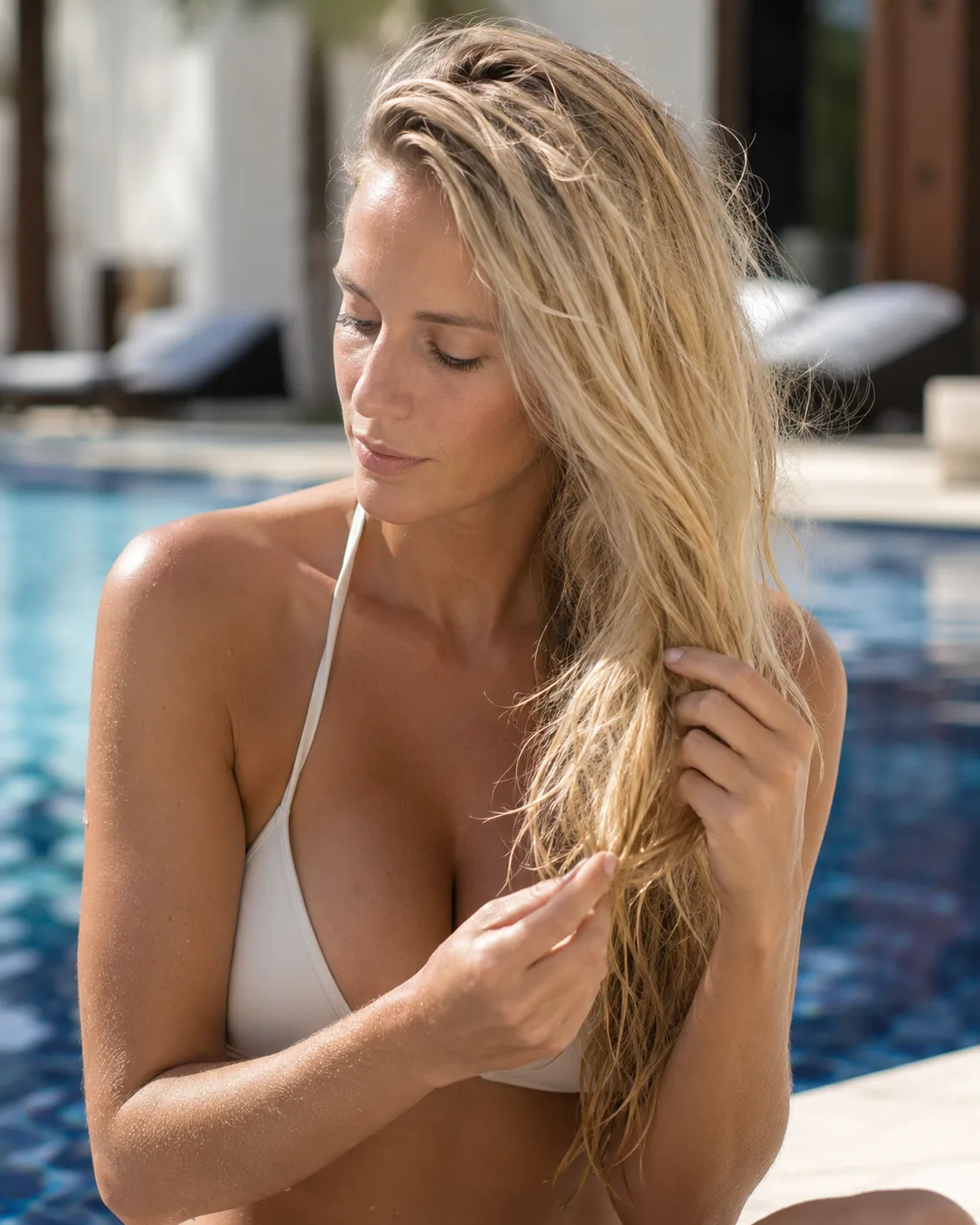
The most important thing you can do before swimming is to saturate your extensions with clean, fresh water. Hair — like a sponge — can only absorb so much liquid. If you saturate your extensions with clean water before entering the pool or ocean, they will absorb significantly less chlorine or saltwater during your swim.
After saturating with fresh water, apply a generous amount of leave-in conditioner or a protective hair oil to the mid-lengths and ends. This creates a barrier between the hair fiber and the pool or ocean water. Braid your hair into one or two loose braids before entering the water — this reduces tangling during swimming and makes post-swim detangling much easier.
For clients with Keratin Bond extensions, avoid submerging the bond attachment points when possible. A swim cap that covers the nape and sides of the head (where bonds are typically placed) can significantly reduce bond exposure to chlorinated water.
After You Swim: The Post-Swim Routine
After swimming, rinse your extensions thoroughly with clean, fresh water as soon as possible. The goal is to remove as much chlorine or salt as possible before it dries in the hair. Rinse until the water runs completely clear.
After rinsing, apply a hydrating conditioner or a deep conditioning mask to the mid-lengths and ends. Allow it to sit for 3–5 minutes before rinsing. This step replenishes the moisture that the chlorine or salt has stripped from the hair.
Gently detangle with a wide-tooth comb or extension brush, working from the ends upward. Never detangle wet extensions aggressively — wet hair is significantly more fragile than dry hair, and aggressive detangling will cause breakage. Once detangled, blow-dry or allow to air dry completely before sleeping or tying the hair up.
Which Extension Methods Are Most Water-Friendly?
Not all extension methods respond equally to water exposure. Here's how the most common methods compare:
Genius Wefts (Invisible Beaded Row): The most water-friendly permanent extension method. The attachment is mechanical (beads and thread), so there is no adhesive to degrade. Clients with Genius Wefts can swim regularly with proper pre- and post-swim care.
Keratin Bond Extensions: More sensitive to water than weft methods. Chlorine and prolonged water exposure can weaken the keratin adhesive over time. Clients with Keratin Bonds should minimize bond exposure to pool water and schedule more frequent maintenance checks if they swim regularly.
V-Light Extensions: Similar to Keratin Bonds in terms of water sensitivity. The cold-fusion bond is more water-resistant than traditional keratin, but still benefits from minimizing direct water exposure at the attachment points.
Tape-In Extensions: The most water-sensitive method. Chlorine and oil-based products can dissolve the tape adhesive, causing slippage. Clients with tape-ins should be particularly cautious about pool swimming and should schedule a maintenance check after heavy water exposure.
Swimming in Tampa: Special Considerations
Tampa's climate presents unique challenges for extension clients who swim. The combination of high humidity, intense UV exposure, and year-round pool and beach access means that extension care in Tampa requires more attention than in cooler, drier climates.
UV exposure is a significant concern for extension hair. Unlike your natural hair, extension hair does not have the scalp's natural oil production to provide UV protection. Use a UV-protective hair product or wear a hat when spending extended time in the sun — especially after swimming, when the hair is already depleted of moisture.
Salt air from Tampa Bay and the Gulf of Mexico can also cause gradual dehydration of extension hair even without direct water contact. Clients who spend significant time outdoors near the water should use a hydrating leave-in conditioner daily and schedule more frequent deep conditioning treatments.
MONACO SALON
Questions about caring for your extensions in Tampa's heat and water? Call Monaco Salon's extension specialists at the Bay to Bay location.
Call 813-259-7555FREQUENTLY ASKED
Common Questions
Answered
Can you swim with hair extensions?
«Yes, you can swim with permanent hair extensions, but precautions are essential. Before swimming, saturate your hair with clean fresh water and apply a leave-in conditioner. Braid your hair before entering the water. After swimming, rinse immediately with fresh water, apply a hydrating conditioner, and detangle gently. Genius Weft extensions are the most water-friendly method; tape-in extensions are the most sensitive to water.
Does chlorine damage hair extensions?
«Yes, chlorine can damage hair extensions over time. Chlorine strips the hair's natural oils and protein bonds, causing dryness, frizz, and brittleness. It can also weaken adhesive-based extension attachments (Keratin Bonds, tape-ins) with repeated exposure. The damage can be minimized by saturating hair with fresh water before swimming, applying a protective conditioner, and rinsing immediately after swimming.
Can you swim in the ocean with hair extensions?
«Yes, you can swim in the ocean with hair extensions. Saltwater is less chemically aggressive than chlorine but causes significant dehydration of the hair fiber. The same pre- and post-swim routine applies: saturate with fresh water and apply leave-in conditioner before swimming, rinse thoroughly and deep condition after. Avoid sleeping with salt-dried extensions — always rinse and condition before bed.
How do I protect my hair extensions while swimming?
«Saturate your extensions with clean fresh water before entering the pool or ocean — this limits how much chlorine or salt the hair absorbs. Apply a protective leave-in conditioner or hair oil. Braid your hair into loose braids before swimming. After swimming, rinse immediately, apply a hydrating conditioner, and detangle gently from the ends upward.
What hair extension method is best for swimmers?
«Genius Weft extensions (also called Invisible Beaded Row or hand-tied wefts) are the most water-friendly permanent extension method because the attachment is mechanical rather than adhesive-based. Tape-in extensions are the most sensitive to water and are not recommended for frequent swimmers.

Talk to a Bay to Bay specialist
Already wearing Monaco extensions? Call or text the salon and we will book your next maintenance or move-up appointment. A system fitted somewhere else needs an assessment first, so tell us that when you get in touch.